
A 35-year-old engineer who spent roughly a year working at OpenAI now faces a federal charge after staff found a secret audio recorder hidden behind a television in one of the company’s executive conference rooms — wrapped, improbably, in toilet paper.
Abdulrahman Alfozan, a Saudi national and legal permanent resident of the United States, was arrested by the FBI on 9 October and charged with using or attempting to use a device to intercept oral communications. He appeared in federal court in California on Tuesday, and a detention hearing is scheduled for 19 October to decide whether he stays in custody while the case proceeds.
Here is what the court filings and the companies involved have actually confirmed so far — and what remains unknown.
How the recording device was found
According to the criminal complaint, OpenAI staff discovered what prosecutors called a “surreptitious audio recording device” on 30 September, inserted into a USB port on the back of a television in a conference room at the company’s San Francisco headquarters. The Guardian reports that Alfozan allegedly plugged the device in on 28 September, and that a security sweep two days later revealed it.
The device was concealed in toilet paper and, per the FBI, had a detachable camera sensor, a digital microphone and microSD storage. The room it was placed in matters: court filings describe it as a space reserved only by executives and executive assistants, used for internal leadership meetings, technical and product sessions, and external briefings with government officials and business counterparts. Discussions there regularly covered what the complaint calls “highly confidential technical, commercial and strategic information”, including OpenAI’s government engagements and commercial relationships.
Alfozan had no authority to access or take part in meetings in that room, prosecutors say. Closed-circuit television footage allegedly showed him near the conference room on eight separate occasions in September.
OpenAI then set a trap of sorts. A camera was placed in the conference room, and on 5 October Alfozan was filmed entering and appearing to look behind the television where the device had been hidden. That same day, the complaint alleges, he left an unattended bag in a different room. When security personnel opened it, they found a second recording device similar to the first — along with Alfozan’s wallet and ID.
The chatbot trail in the court filings
One of the more striking elements of the complaint is how much of the alleged preparation played out through AI assistants — the same category of tool Alfozan built for a living.
Between 17 August and 16 September, prosecutors say, Alfozan used a productivity AI assistant to ask about OpenAI’s building addresses, meeting rooms, room capacities and calendars. Sample questions listed in the complaint include “how about external partners, where would they usually meet with OpenAI at” and “can you list today’s meeting in this room”. The Guardian adds that the prompts also touched on “leadership and exec” locations.
Then, in September, a chatbot account associated with Alfozan’s spouse allegedly fielded questions about how to build, customise, install and remotely access a recording device — including how to “build a continuous audio recorder”, improve audio and live listening, and encrypt the SD card. According to the indictment, that same account made inquiries referencing unique identifiers of the device later found at OpenAI’s offices.
Who is Abdulrahman Alfozan?
Alfozan joined OpenAI as an engineer in July 2025 and had worked there for around a year before the alleged bugging attempt. The complaint says he was educated in the US and has been a legal permanent resident since 2020. In a recent interview with the podcast Identity Capital, posted online on 24 September and conducted in Arabic, he described his path from coding in high school in Dammam, Saudi Arabia, to a career in Silicon Valley, and referred to himself as an “introvert” who pushes himself to help other young professionals succeed.
That interview also surfaced a notable detail: in July 2016, Alfozan and other Saudi nationals working in Silicon Valley met with Crown Prince Mohammed bin Salman during the prince’s US tour promoting the Vision 2030 economic diversification plan. Alfozan recalled discussing whether the group should return home immediately or build more experience first, and said the prince told them the country was developing quickly but lacked the talent to train the next generation.
Beyond his day job, Alfozan served as a venture partner at Raed Ventures, a Saudi venture capital firm focused on investments in the Middle East. The firm announced his appointment on 8 February 2025 — two days after announcing that Prince Khalid Bin Bader Al Saud, a member of the ruling Al Saud family, had joined as a venture partner. Raed’s bio page describes Alfozan as “a seasoned technology professional with deep experience in startups, entrepreneurship, and scaling tech companies” who was serving as Engineering Lead at OpenAI with a focus on AI agents and the data platform.
The Financial Times reported on Wednesday that when Saudi tech influencers visited San Francisco in September, it was Alfozan who welcomed them to OpenAI’s offices and gave them tours.
The one-way ticket — and the flight risk question
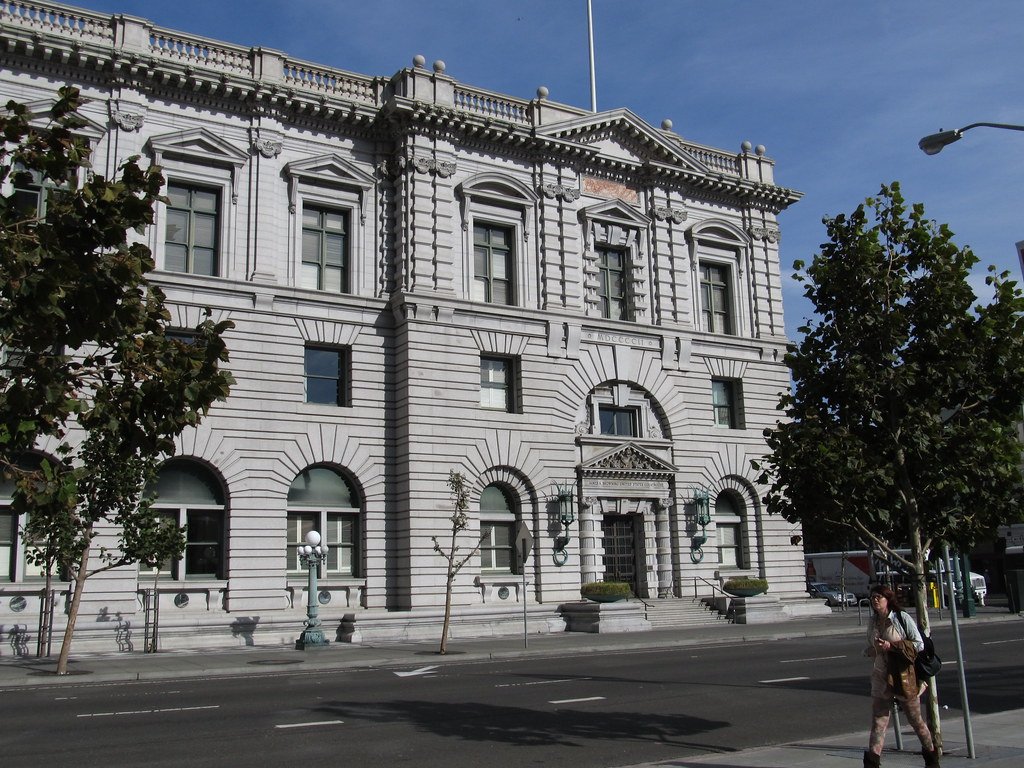
Prosecutors moved quickly once they had enough evidence. In an 8 October filing asking a judge to seal the criminal complaint and arrest warrant, the US Attorney’s Office in San Francisco revealed that Alfozan had booked one-way tickets for 12 October from San Francisco to Saudi Arabia via Istanbul, for himself, his wife and a third family member. Alfozan “has the means — and will have the incentive — to flee the United States sooner if he learns about this case before he is arrested”, the filing argued. The judge granted the sealing request, and Alfozan was arrested the next day. He has been detained since.
CNBC also reports that OpenAI held discussions earlier this year with Saudi Arabia’s Public Investment Fund, the country’s sovereign wealth fund, about investing in the company. The company declined to say whether it knew about Alfozan’s role at the Saudi firm.
Is this espionage? What is — and isn’t — charged
Here is where caution is warranted. Alfozan is charged with one count of using or attempting to use an electronic, mechanical or other device to intercept oral communications. He is not charged with corporate espionage or stealing trade secrets, and it is not yet clear what he intended to do with any recordings. The case is being handled by the National Security, Cyber & Special Prosecutions Section of the US Attorney’s Office for the Northern District of California — a unit whose remit hints at the government’s framing, even if the charge itself is narrower.
The complaint does not allege that Raed Ventures or its other partners knew about the alleged bugging. Raed did not respond to requests for comment, and CNBC has also sought comment from the Saudi embassy in Washington.
Still, the Saudi connections have drawn scrutiny. A former CIA official with extensive Middle East experience, speaking to CNBC on condition of anonymity, described Raed Ventures as “basically a state organ” of the Saudi government, noting that one of its funds received an investment in December 2024 from Saudi Venture Capital, a subsidiary of SME Bank within the National Development Fund. If the alleged bugging were part of a state-sponsored effort, the former official said, it would show that “in the AI and tech boom, even the kingdom of Saudi Arabia has assessed that the risk is worth the gain to engage in economic espionage against a close ally” — and called the incident “probably the tip of the iceberg”. That is an assessment, not a finding; no such link has been established in court.
What OpenAI has said
OpenAI addressed the case publicly on Tuesday. In a post on X, the company said it had used its own AI models to “understand the device and where it had come from”, identified that a specific employee had planted it a few days earlier, and terminated his contract. Crucially, it added: “At this time, we have no indications of this individual inappropriately accessing or exfiltrating model weights, source code, or customer data.”
The company also struck a defensive note about its broader security posture: “We take protecting our technology, data and people seriously, and as a matter of national importance. Our security program is designed to protect against a wide range of threat actors, from insider risks to cybercriminals to nation states, and this case is an example of how AI can help address these sophisticated security threats.” OpenAI declined to share further details about the conference room, citing operational security, and said it was grateful to the agents and prosecutors who moved quickly to make an arrest.
The defence: “wholly out of character”
Alfozan’s lawyer, William Pernik, has pushed back firmly. “Like countless Americans, Mr Alfozan came to this country years ago as a young person with a dream,” Pernik told the BBC. “These allegations appear wholly out of character for him, and we will relentlessly investigate all evidence produced by the government in this case to understand what actually happened, who was responsible and any possible reasons why.”
He added: “In the meantime, we respectfully ask everyone to withhold judgment until full facts become known. Like every one of us, Mr Alfozan is presumed innocent, and what has been made public is an accusation, not a finding of guilt.” Pernik also told CNBC by email that the information available so far has been “extremely limited”, since the charging documents had only just been unsealed.
Alfozan has not made any public comment on the indictment.
What happens next
The detention hearing on 19 October will determine whether Alfozan remains in custody while proceedings continue — and his lawyer is expected to argue for release on bond. The FBI investigation is ongoing.
If convicted, Alfozan faces a maximum penalty of five years in prison and a $250,000 fine. Given what prosecutors have laid out so far — the executive-only room, the concealed device, the alleged second recorder, the booked flights out — the questions hanging over the case are less about whether a bug was planted and more about why, and for whom. For now, those answers remain sealed in an ongoing investigation.
FAQ
Who is Abdulrahman Alfozan?
Abdulrahman Alfozan is a 35-year-old Saudi national and US legal permanent resident who worked as an engineer at OpenAI from July 2025 and served as a venture partner at the Saudi venture capital firm Raed Ventures. He was arrested by the FBI on 9 October 2026.
What was he charged with?
One count of using or attempting to use an electronic, mechanical or other device to intercept oral communications. He is not charged with corporate espionage or stealing trade secrets. If convicted, he faces up to five years in prison and a $250,000 fine.
Where was the recording device found?
Hidden in toilet paper and inserted into a USB port on the back of a television in an executive conference room at OpenAI’s San Francisco headquarters. Staff discovered it on 30 September 2026 during a security sweep.
When is his next court date?
A detention hearing is scheduled for 19 October 2026 to determine whether Alfozan remains in custody while the case proceeds. He has been detained since his arrest on 9 October.
Did OpenAI say any data was stolen?
No. OpenAI said it has “no indications of this individual inappropriately accessing or exfiltrating model weights, source code, or customer data”, and terminated Alfozan’s contract.